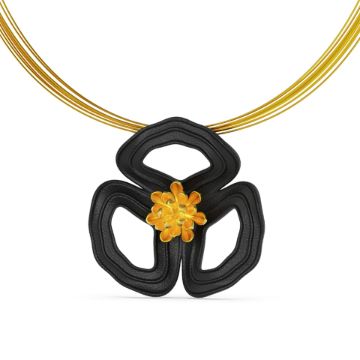

Pendants in 3D printed nylon by Oliver Hampel. Intricate, open sculptural forms inspired by nature — designs that could not be produced by casting, at a scale that would be impractical to wear in metal.
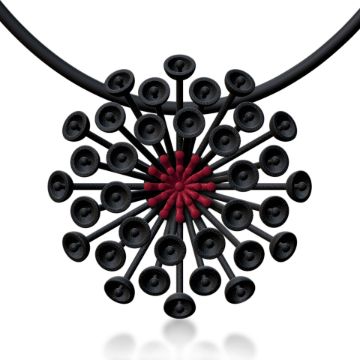
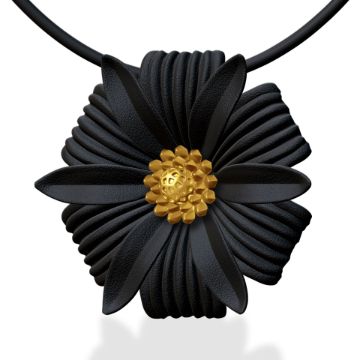
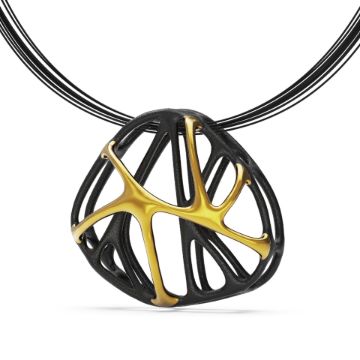
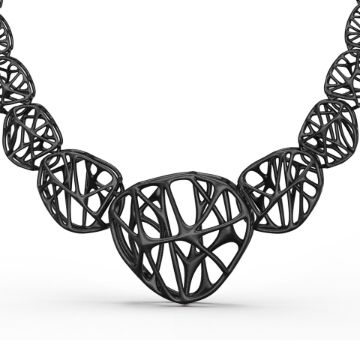
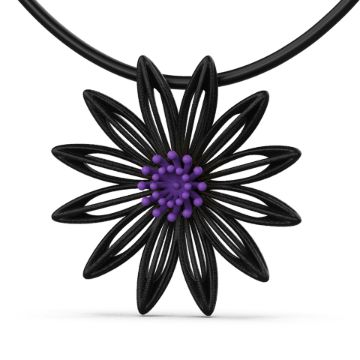
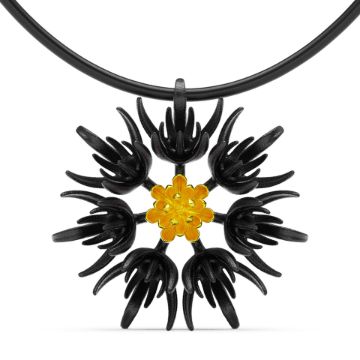
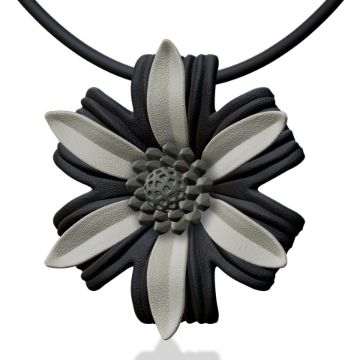
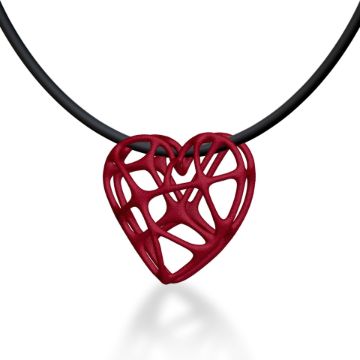
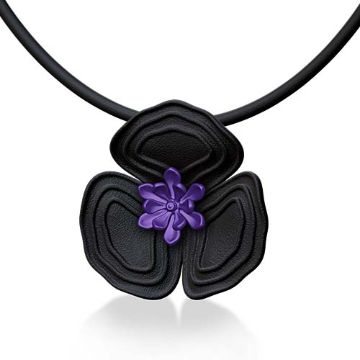
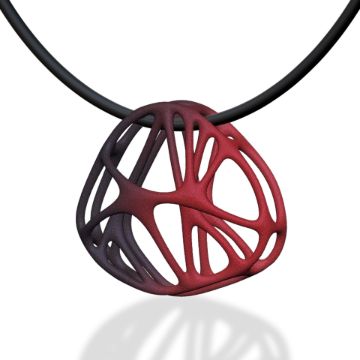
A pendant is where 3D printing earns its place most obviously, because scale is the whole point of a pendant and scale is exactly what metal makes expensive.
A form this size, cast in silver, becomes both costly and heavy enough to sit badly on a chain. Printed in nylon, the same piece can be as large as the design wants to be and still sit where it should. That changes what is worth designing. Several of these pieces exist because the material made them possible, not the other way round.
The forms themselves come out of the same process as the rest of the collection: built layer by layer in a powder bed, with no mould, no tooling, and no restriction on what the inside can do. The result is depth you can look into rather than a surface you look at.
The bail is printed as part of the piece rather than added afterwards, so a pendant is a single continuous form with no join and no metal against your skin. The color is dyed into the material rather than sprayed onto it, which matters more on a piece like this than it sounds — dye reaches into the inside of an open form, where a spray gun never could. The recesses are the same color as the faces.
They need almost no care. They do not tarnish, water is not an issue, and warm water with a soft brush cleans them completely.
See the full 3D printed collection, or the matching earrings.
More on the process: how these pieces are made.
Also worth reading: what touches your skin — a pendant's bail is printed, so there is no metal on it at all.
