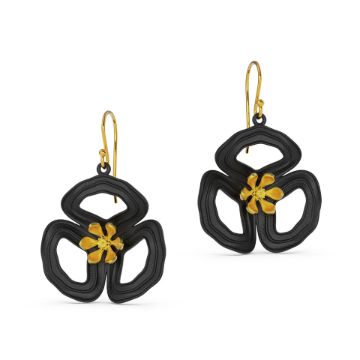
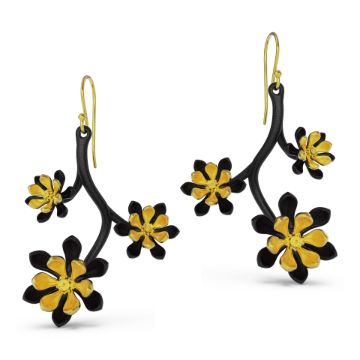
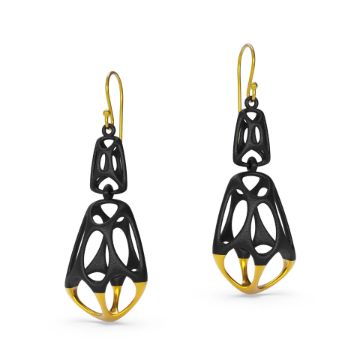
Gold Poppy Dangle Earrings
This pair of earrings showcases a unique and modern floral design.
$290.00

Sculptural earrings, pendants and necklaces designed by Oliver Hampel in 3D printed nylon. The material makes forms possible that casting and fabrication cannot — intricate, open, and at a scale that stays wearable because nylon weighs so little.
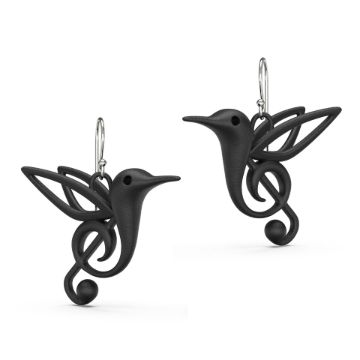
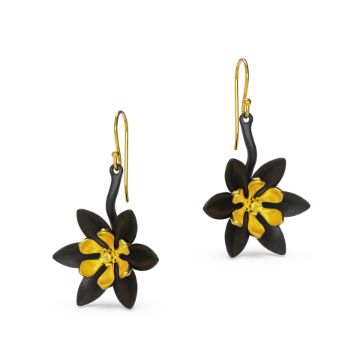
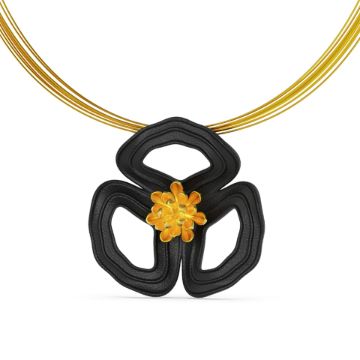
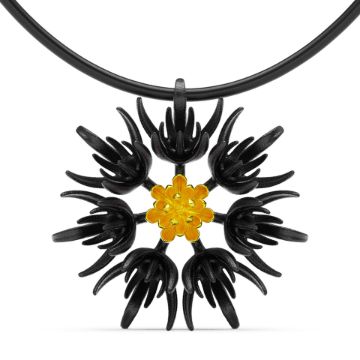
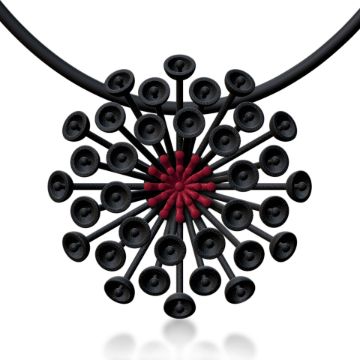
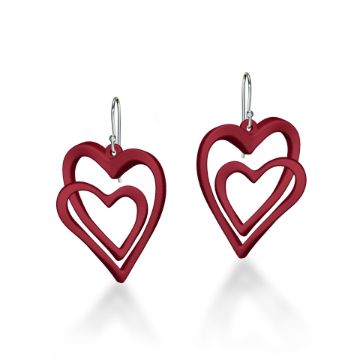
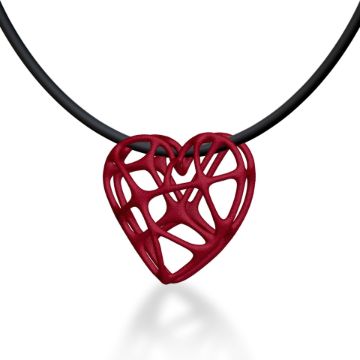
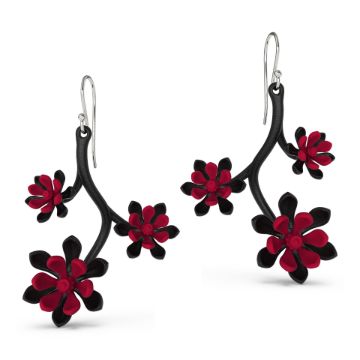
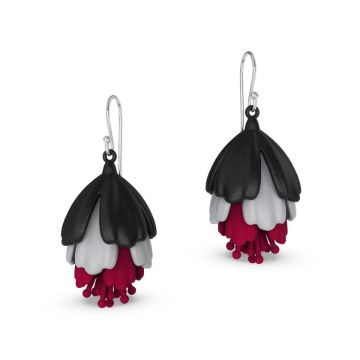
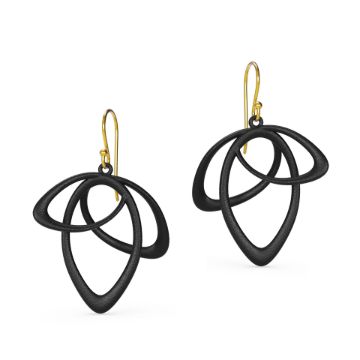
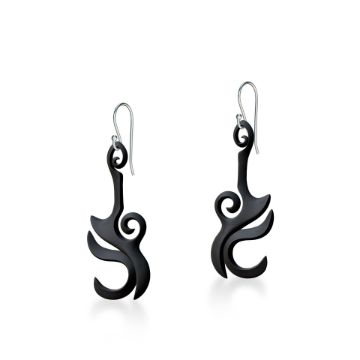
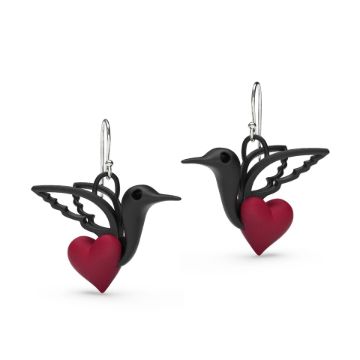
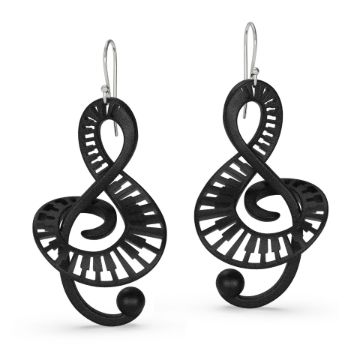
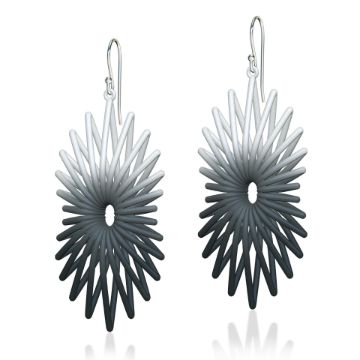
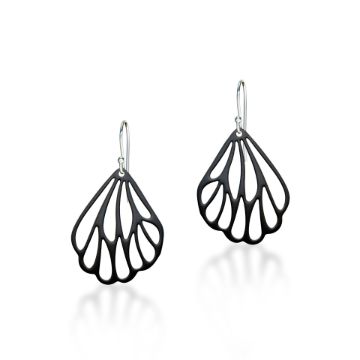
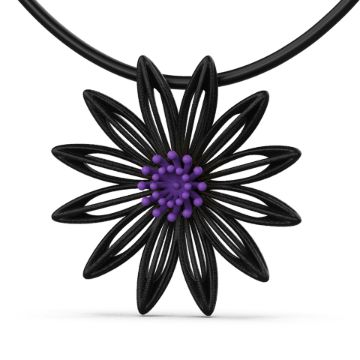
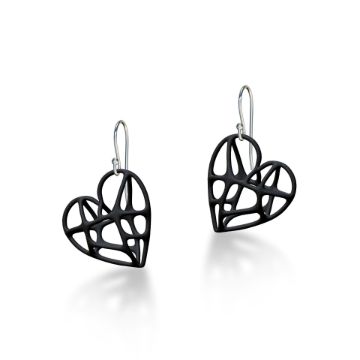
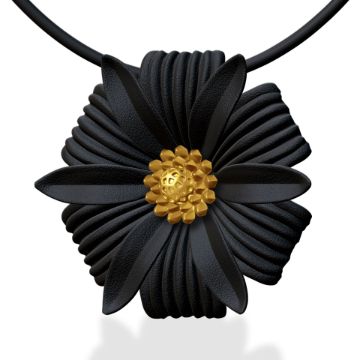
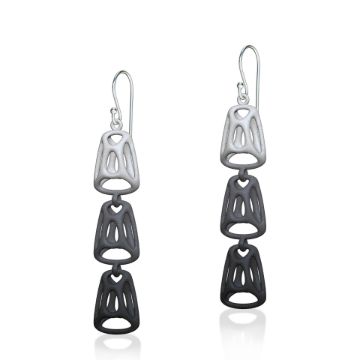
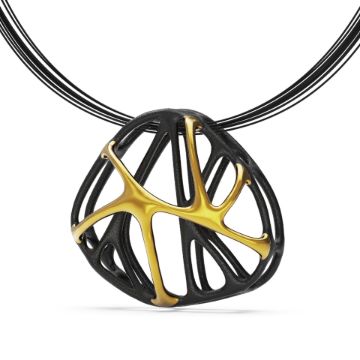
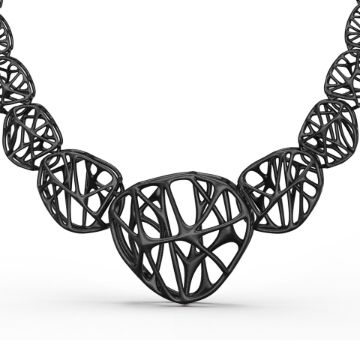
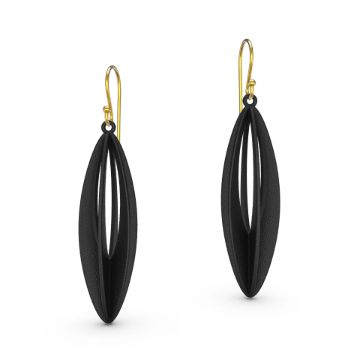
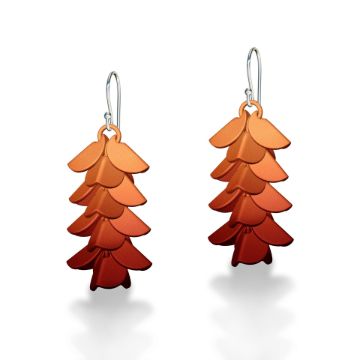
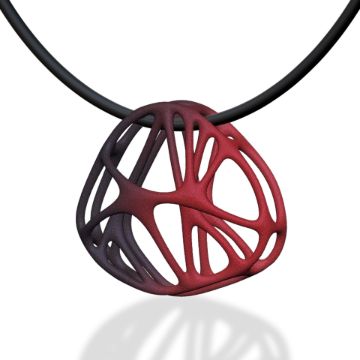
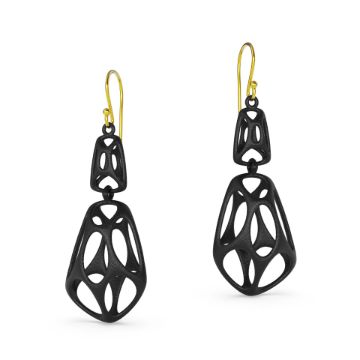
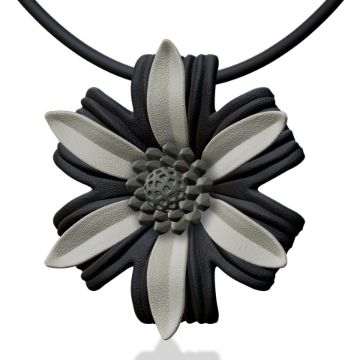
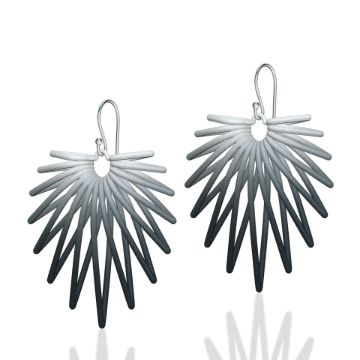
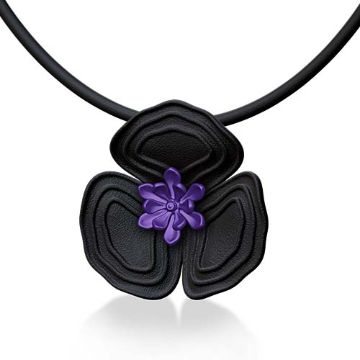
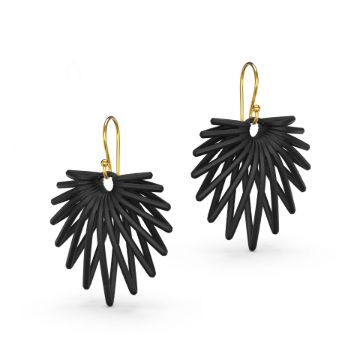
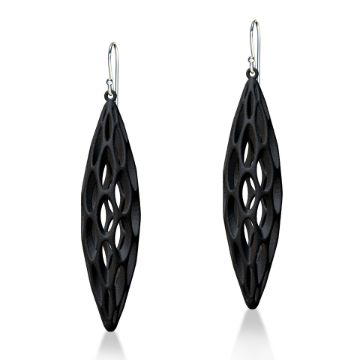
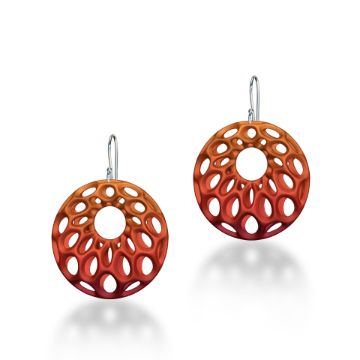
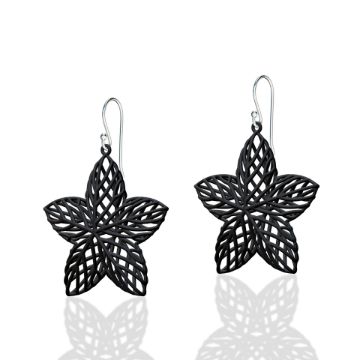
Every piece in this collection begins as a mathematical description rather than a drawing. The form is grown in software, adjusted, and grown again — sometimes dozens of times — before a single one is printed.
The printing itself is nothing like the desktop machines most people picture. These pieces are made in a powder bed: a chamber of fine nylon powder, fused layer by layer, with the unfused powder supporting the piece as it forms. That is what makes geometry possible here that simply cannot be cast or fabricated — interlocking forms, hollow structures, lattices that hold their shape at a fraction of the weight of metal.
When a piece comes out of the machine it is raw and white. It is cleaned, finished by hand, and then dyed, so the color soaks into the material rather than being applied to the outside of it. There is no coat of paint and no plated finish, which means there is no layer that can chip, flake or peel away.
Earrings are hung on sterling silver — ear wires and posts, some of them plated in 18K gold — so the part that passes through your ear is always metal. Pendants work the other way: the bail is printed as part of the form, so the piece is one continuous object with no metal against your skin at all.
The result is jewelry that reads as substantial and weighs almost nothing. It does not tarnish, it does not mind water, and it will not pull on your ear through an evening.
Browse the collection by form: 3D printed earrings and 3D printed pendants.
Nylon jewelry requires different care from traditional silver or gold jewelry. For cleaning, handling and storage recommendations, visit our Jewelry Care Guide.
More on the process: how these pieces are made.
Also worth reading: how durable nylon jewelry is.
